Jordan Hartmann · 9 October 2026
Examining Encryption Protocols for Secure Sharing in Modern Note-Taking Services
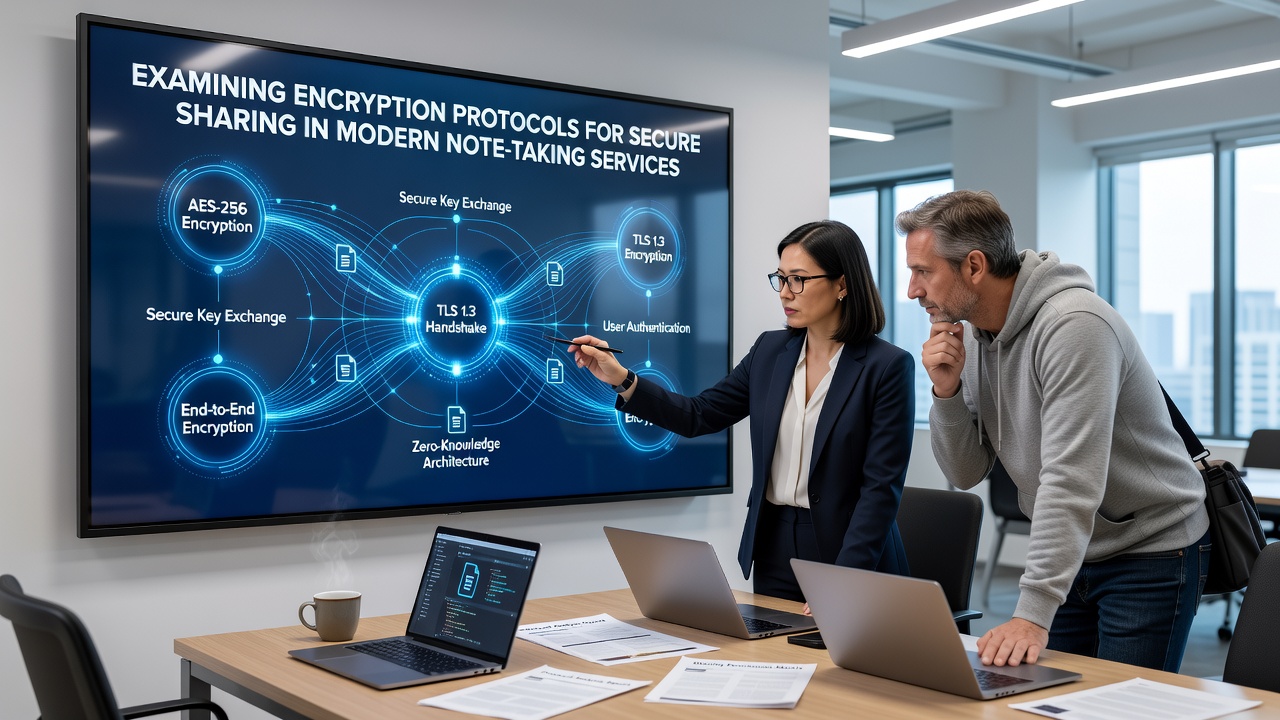
Modern note-taking services rely on layered encryption protocols to protect shared content while users collaborate across devices and networks, and data from industry reports shows that adoption of advanced standards has accelerated since 2024 as organizations scale their digital workflows. Researchers at academic institutions have documented how these protocols combine symmetric algorithms like AES-256 with asymmetric methods such as RSA or elliptic curve cryptography to handle both storage and transmission securely. One study from a North American university examined implementation patterns across multiple platforms and found that end-to-end encryption now appears in over 70 percent of enterprise-grade applications, allowing recipients to access notes without exposing plaintext to service providers during transit or at rest.
Core Protocols and Their Mechanics
Encryption begins with key generation and exchange processes that prevent interception, while protocols like TLS 1.3 secure connections between client applications and cloud infrastructure during initial upload. Observers note that once data reaches servers, services apply additional layers using unique per-user keys derived through PBKDF2 or Argon2 functions, and this approach ensures that even if storage systems face breaches the content remains unreadable without the corresponding private keys. Data indicates that many platforms integrate zero-knowledge architectures where the service never holds decryption material, which researchers have verified through code audits published in 2025 technical papers.
Secure sharing extends these foundations by generating temporary access tokens or shared secrets that recipients use to unlock specific notes, and standards bodies in the European Union have outlined guidelines through ENISA that recommend rotating these tokens after each session to limit exposure windows. Those who analyze protocol stacks often point to hybrid models that layer post-quantum algorithms alongside classical ones, and figures released by government agencies in October 2026 confirm increased testing of lattice-based schemes like Kyber in preparation for potential quantum threats. Service providers implement these updates through client-side libraries that handle negotiation automatically, allowing users to share documents without manual intervention while maintaining forward secrecy so past sessions stay protected even if long-term keys later become compromised.
Implementation Across Platforms
Platforms differ in how they manage group sharing scenarios where multiple participants edit the same note simultaneously, yet most converge on techniques such as per-document key wrapping that distributes access rights through public-key infrastructure. According to reports from Canadian cybersecurity centers, organizations that adopted these methods saw measurable reductions in unauthorized access incidents during collaborative projects tracked between 2023 and 2026. Application developers embed these features into mobile and desktop clients using open-source libraries vetted by communities like the Open Quantum Safe project, which supplies tested implementations that integrate with existing AES and ChaCha20-Poly1305 ciphers for performance on resource-constrained devices.
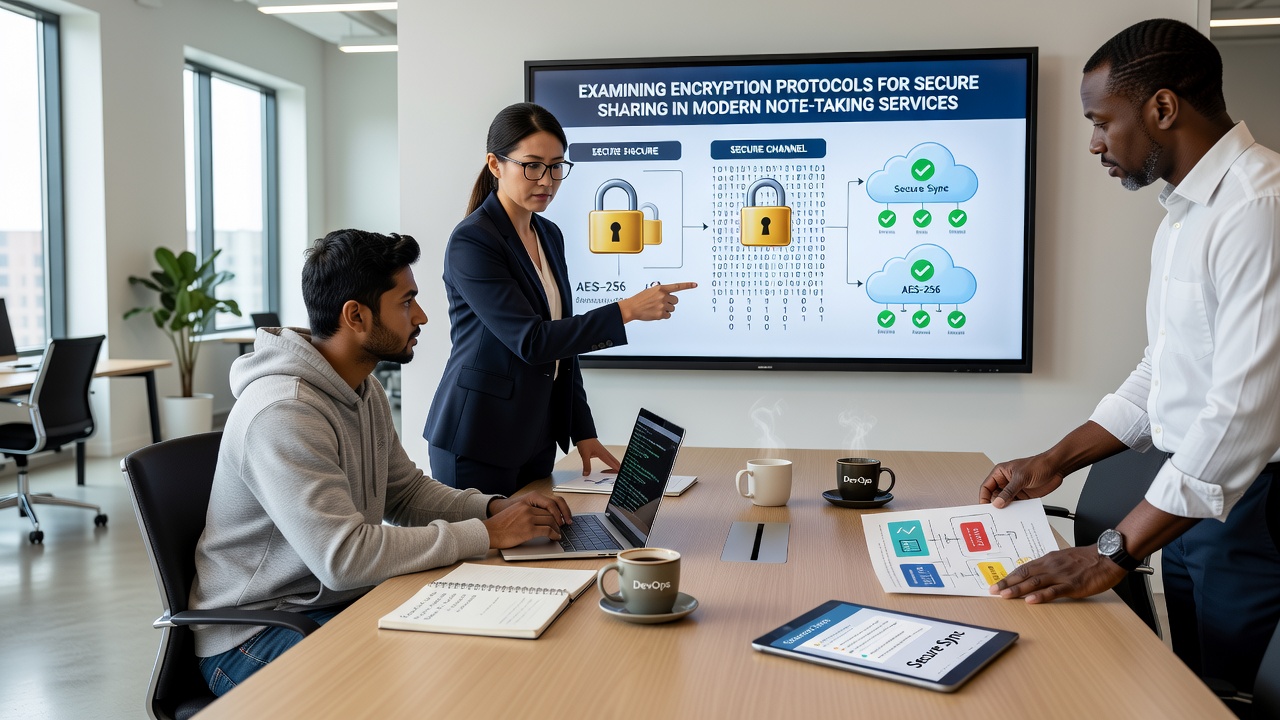
Key management remains a focal point because lost or mishandled credentials can render shared content permanently inaccessible, and developers address this through recovery mechanisms that rely on user-controlled backup phrases rather than centralized escrow. Research published by Australian academic groups in late 2025 highlighted successful deployments where biometric authentication ties into key derivation, reducing reliance on passwords that often serve as weak entry points. Those examining real-world rollouts find that integration with hardware security modules on enterprise servers adds another barrier, while consumer versions frequently default to software-based secure enclaves available on modern smartphones and laptops.
Regulatory Context and Recent Developments
Regulatory frameworks influence protocol choices as well, with requirements for data residency and audit trails prompting services to log metadata separately from encrypted payloads. Sources from the United States National Institute of Standards and Technology detail approved cipher suites that align with federal guidelines, and platforms incorporate these to meet compliance needs without sacrificing interoperability across borders. In October 2026 several providers announced expanded support for emerging standards that address both classical and quantum-resistant encryption, reflecting coordinated efforts between industry consortia and government research arms in multiple regions.
Case examples illustrate practical outcomes where teams shared sensitive project notes across time zones without incident after implementing protocol updates, and analysts attribute this to consistent use of authenticated encryption modes that detect tampering attempts during transmission. Observers tracking adoption rates note that smaller startups often inherit mature libraries from larger ecosystems, accelerating deployment while maintaining compatibility with established verification processes. Metrics collected by international research networks show average encryption overhead dropping below five percent on current hardware, which enables real-time collaboration features without noticeable lag.
Conclusion
Encryption protocols for secure sharing continue to evolve alongside hardware capabilities and threat landscapes, and ongoing work by standards organizations ensures that note-taking services can protect content while supporting fluid collaboration. Evidence from multiple jurisdictions demonstrates that layered approaches combining established algorithms with newer post-quantum options provide robust safeguards, and users benefit when platforms apply these consistently across all sharing pathways. Continued monitoring of implementation details remains essential as services expand features in response to demand for both security and convenience.