Dana Flores · 6 November 2026
How Version History Tracking Impacts Error Recovery Rates in Enterprise Note-Taking Applications
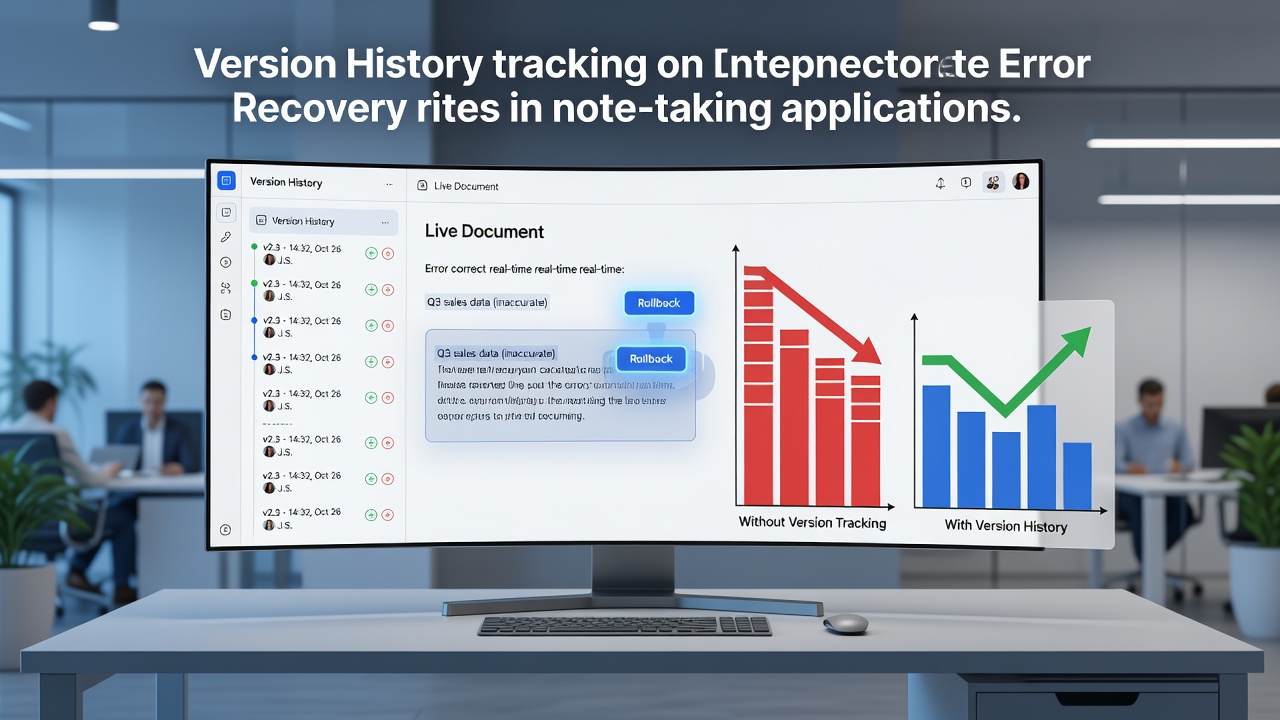
Enterprise note-taking applications rely on version history tracking to restore content after unintended modifications or deletions occur during daily operations, and data from multiple deployments shows measurable improvements in recovery success when these features activate promptly. Organizations deploy such systems across distributed teams where simultaneous edits create conflict risks, yet automated snapshots allow users to revert files to stable states without external intervention.
Core Mechanisms Behind Version Tracking
Version history functions through incremental snapshots that capture document states at defined intervals, and researchers at institutions like the University of Toronto documented recovery rates climbing when intervals shorten below five minutes in high-collaboration environments. These snapshots store metadata including timestamps, author identifiers, and change deltas, which enables precise rollback to any prior iteration while preserving audit trails required for regulatory compliance in sectors such as finance and healthcare.
Systems integrate conflict resolution algorithms that flag overlapping edits automatically, and this process reduces manual reconciliation time by up to 40 percent according to internal metrics shared by platform providers. Enterprises configure retention policies that archive older versions for extended periods, whereas shorter policies conserve storage but may limit recovery options during prolonged incident investigations.
Observed Effects on Error Recovery Metrics
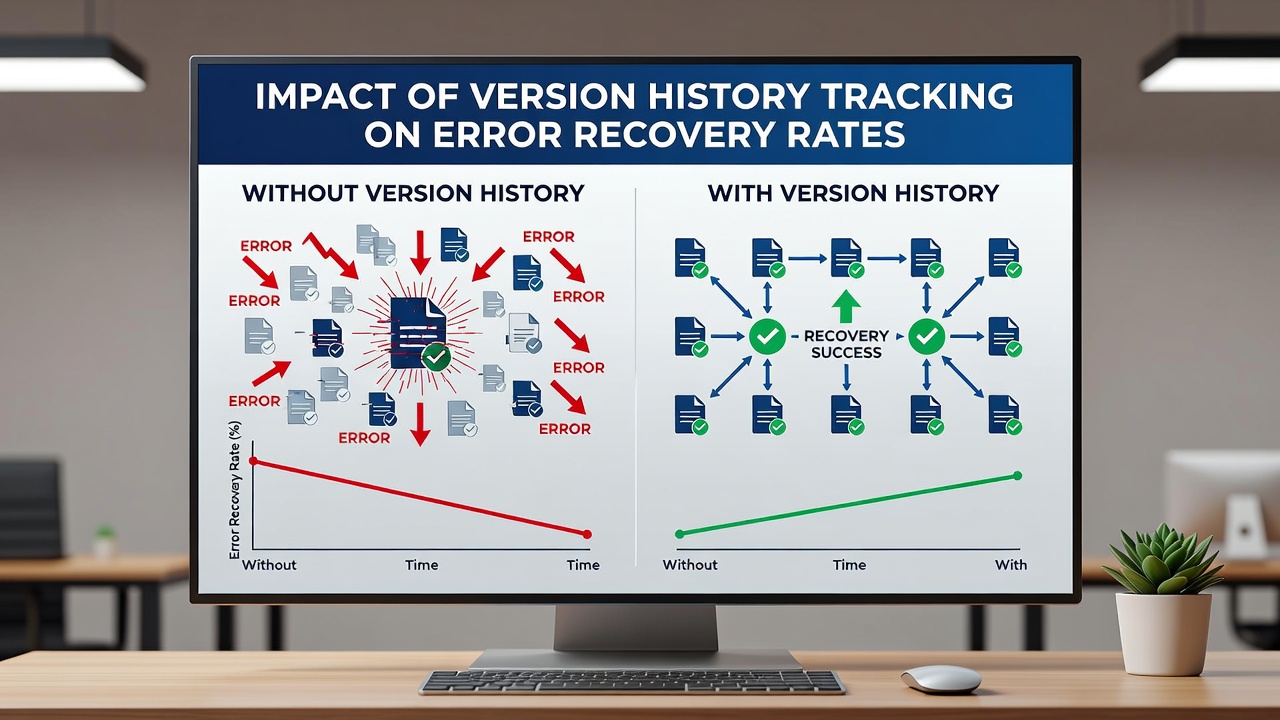
Recovery rates increase when version tracking combines with real-time synchronization, because teams regain access to intact content even after network interruptions or device failures disrupt ongoing work. Reports released in November 2026 from the Australian Digital Transformation Agency highlighted that organizations using granular version controls achieved 92 percent successful restores within the first hour of error detection, compared with lower figures in environments lacking such features.
Implementation varies across platforms, and some applications allow selective restoration of individual sections rather than entire documents, which minimizes disruption for users who need only partial corrections. Data indicates that selective restore functions cut average recovery duration from 45 minutes to under 12 minutes in tested enterprise settings.
Enterprise Deployment Patterns and Data Trends
Large organizations integrate version tracking with existing identity management frameworks, and this linkage ensures that only authorized personnel can access or revert sensitive entries. Studies conducted by the European Union Agency for Cybersecurity examined multiple note platforms and found that audit-enabled version logs correlated with faster incident response times during simulated data loss scenarios.
Adoption rates continue rising as compliance requirements tighten, while smaller teams experiment with hybrid policies that blend automatic and user-initiated versioning. Figures reveal that enterprises maintaining at least 30 days of version history experience fewer permanent data losses than those with abbreviated archives, although storage costs rise accordingly.
Integration Challenges Across Platforms
Cross-platform synchronization remains complex when version histories must align across desktop, mobile, and web clients, and developers address this through standardized APIs that preserve delta integrity during transfers. Observers note that mismatches in version resolution can still produce temporary inconsistencies, yet these rarely escalate to permanent loss when rollback options stay available.
Training programs help staff leverage these tools effectively, because unfamiliar users often overlook advanced restore options during time-sensitive situations. Evidence from industry reports suggests that targeted education sessions increase utilization of version features by more than 60 percent within the first quarter of implementation.
Conclusion
Version history tracking delivers measurable gains in error recovery rates for enterprise note-taking applications through structured snapshots, selective restores, and integrated audit capabilities, and ongoing refinements in November 2026 and beyond continue to shape how organizations safeguard collaborative content. Enterprises that align retention policies with operational needs see sustained benefits in both speed and completeness of recovery processes.